

Maybe you have noted an excessive dragging of your pet along the floor or an excessive scratching/licking of the anal area. If not that, he/she might be having problems when defecating or you might have noted swollen anal sacs. Either way, this should give you an idea that your pet is suffering from Anal Gland Abscesses.
However, what is Anal Gland Abscesses?, How does it occur? And, what do you do when you note that your pet is suffering from anal sac disease? To help you out, here is a research that entails the answer to all these questions. Have a look and get an idea of what you should do when your pet is suffering from this.
What are Anal Glands?
Before we go any further, Let’s have a look at what anal glands are:
Anal glands also referred to as anal sacs, are small glands located near the anus of mammals such as dogs and cats. These glands are located at the 4 o’clock, and 8 o’clock positions when you consider their spot when regarding to a clock.
In particular, the Glands are located on the side of the anus and between the internal and external sphincter muscles, i.e., the muscles that hold the feces in the rectum until the dog defecates. The glands empty through short and narrow ducts located inside the anus. Also, they each sac/gland is lined with specialized sebaceous and apocrine glands that secrete a brown and oily fluid that has a lot of odor.
Something that you are supposed to note about these glands is that they can fill with a thick, clear/dark, watery substance that is usually smelly. However, this is normal for all pets. The only times you are supposed to worry is when the discharge contains blood since this can mean that something is wrong with your pet.
What do Anal gland abscesses look like and how do they occur?
Now that you know where to find Anal glands on your pets, let’s concentrate on our topic and have a look at what anal gland abscesses look like and how they occur.
How does anal sac disease occur?
Anal sac disease occurs when anal glands get impacted and infected. Impaction occurs when the anal glands are unable to discharge the secretions stored in them which result in abscesses. If the infected area remains untreated for long, the pressure in the abscessed anal gland increases which may result in rupturing through the skin since the impacted substance cannot pass through the anal gland duct.
What do anal gland abscesses look like?
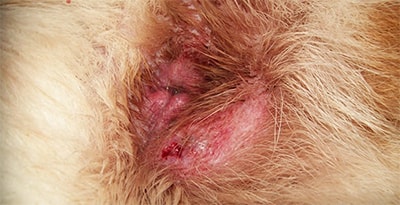 When your pet is infected with anal abscesses, you can expect to see a red, boil-like swelling on one side or both sides of the anus. This swelling is usually painful to the point you will find your pet scooting around or licking its rectum excessively. In other circumstances, anal gland abscesses occur as an abnormal opening(s) on one or both sides of the anus. The openings are as a result of ruptured swellings where the discharge starts to drain.
Causes, Symptoms, and Treatment of anal sac disease
Causes
Dog anal gland abscesses can be a result of different things, and these include:
- Blocked anal glands which result in impaction.
- A tear in the anal canal that becomes infected.
Note that obese pets are at a high risk of this disorder due to the extra body fat in the anal region that reduces the pressure that feces apply on the glands.
Also, this disorder tends to place dogs that pass chronically-soft stool at a higher risk.
You will also note that pets with narrow ducts are at a high risk of this disorder since the ducts obstruct the flow of the anal sac material.
Symptoms
Apart from scooting and excessive licking of the anal region, other symptoms of anal sac disease include:
- Difficulty in defecating.
- Blood or puss on the surface of feces.
- Swelling or bump near the rectum.
- Straining or vocalizing during defecation.
- Abnormally formed feces.
Treatment
Once you learn that your pet is suffering from anal gland abscesses, what do you do next?
The solution is to take the pet to a pet vet who may treat this medically or surgically. In particular, the veterinarian can treat it medically if the swelling is ruptured or surgically under general anesthesia if it has not ruptured.
During surgery, the veterinary opens the abscessed gland so that it can drain the infected fluid to relieve the pressure. On the other hand, if the gland is ruptured, the veterinarian rinses the anal sac to remove the infected material if any exists.
Note that, you should also receive an antibiotic that will last for a week, but the doctor can also administer an injectable antibiotic for cat anal sac disease.
If your pet suffers from a recurrent anal gland abscess, it can benefit from a surgical removal of the affected sacs which is referred to as Sacculectomy. However, this should be performed by a certified and experienced veterinary surgeon since the operation can result in temporary or permanent nerve damage.
How can I prevent this?
There are several ways to prevent anal sac disease. These include;
- Avoid routine expression of the anal glands.
The reason behind this is that the ducts that connect the anal glands to the anus are narrow which means that routine expression of the anal glands can result in inflammation which can lead to abscesses. - Second, keep your dog’s weight at check.
The reason is that obese dogs tend to have recurrent abscesses due to their inability to empty their anal glands efficiently. Therefore, take caution of your pup’s diet and ensure that he/she takes a proper diet as this helps to reduce the incidence of anal glands impaction. - Feed your pet with Glandex
Glandex is vet recommended for healthy bowels & digestion. Here are details of Glandex:
Glandex Powder for Dogs & Cats
Anal Gland & Sac Supplement for Pets – Vet Recommended for Healthy Bowels & Digestion
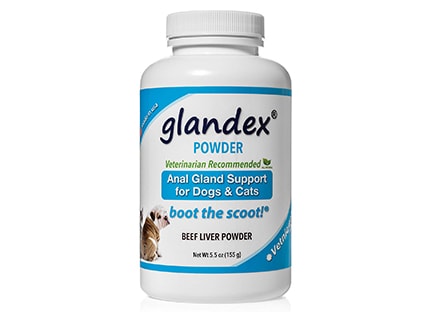
The final way to prevent anal glands abbesses is through feeding your pet with Glandex powder which is an American-made product. Glandex comes in the form of a peanut butter soft chew treat and an irresistible beef liver powder so that your pet can love it.
The powder is packed with probiotics and digestive enzymes that support the immune and digestive system. Also, it includes natural anti-inflammatories and fiber that prevent inflammation while promoting natural emptying of the anal sacs.
Other active ingredients of the powder are:
- Pumpkin Seed- A high-quality fiber source.
- Probiotics- Helpful bacteria that keep the gut healthy.
- Apple Pectin- A soluble fiber found in the walls of plant cells.
- Quercetin Dihydrate- An antioxidant found in vegetables, grains, fruits, and leaves.
- Bromelain 600 GDU/g- Mixture of enzymes found in pineapples that helps to digest proteins.
- Lactobacillus Acidophilus- A probiotic that improves the symptoms of Irritable Bowel syndrome, reduces cholesterol, and diarrhea.
You can feed your pet with this patented formula without worrying about its safety since it does not contain soy, corn, wheat, artificial ingredients, or preservatives. With it, you can be sure to get results within 3-5 weeks since it is tested and proven to support healthy anal glands in dogs and cats.
Final Verdict
You do not want to see your pet scoot, vocalize when pooping, or scratch excessively due to Anal Gland Abscesses. So, consider adopting these ways to prevent it, and when the disease occurs, work with an experienced vet to eliminate the issue.



LEAVE A COMMENT